
Finding Botanical Art Inspiration in Italian Countryside Walks
There is a stony track between two terraced fields, somewhere between the olive groves and the last house of the village, where the best botanical drawing lesson of the year costs nothing. It runs beside a dry stone wall for perhaps two hundred metres. In late May it holds poppies, cornflowers, wild fennel, vetch and four kinds of grass in a strip no wider than your arm. Nobody planted any of it. You do not need a ticket or a long drive, only a slow hour, a pencil, and the habit of looking down.
Start with the edge, not the centre
The most generous subjects in the Italian countryside grow where the ground has been disturbed and left alone: the base of a wall, the gravel beside a gatepost, the ditch where rainwater collects, the seam between asphalt and wheat. These places are sunny, well drained and repeatedly ruined, which is exactly what poppies, chicory, wild carrot and red valerian want.
Terraced country is full of such edges. Every retaining wall, every set of stone steps, every gap in a paved courtyard is a small habitat. Capers trail over sunny walls in the south; caper-like valerian and cymbalaria cling to damp stone further north; fennel sends its sulphur-yellow umbels up through roadside grass in July. Choose one edge, walk it slowly in both directions, and note what grows at the top of the wall, in the middle, and at the foot. The three plant communities will be different, and each is a drawing.
Read the season in small shifts
Think of the year as a series of overlaps rather than four blocks. Each shift lasts about three weeks and changes what is worth carrying home in the sketchbook.
Late winter to early spring
Rosemary flowers through the cold, and almond blossom arrives while the hills are still bare. Look for primroses on shaded banks, hellebores under hedges, and anemones opening in olive groves after rain. This is also when wild orchids begin to appear in meadows. They are protected across much of Italy, so treat them as subjects to draw and photograph, never to pick.
Late spring
The poppy and cornflower weeks are the ones most walkers wait for, and they last shorter than you expect. Broom turns whole slopes yellow, wild roses open in hedges, elderflowers show up white against dark foliage. Draw stems now, while they are still green and turgid, because the shapes you record here will be the ones you return to in August.
High summer
Everything dries and everything improves as a subject. Chicory gives you blue on roadsides at midday; cardoons give you architecture. Grass seed heads bleach to straw and hold their form for weeks, which makes July and August the best time for texture studies and the worst time for finding fresh leaves. Carry water and walk early.
Autumn
The first proper rains bring a second, quieter spring: low rosettes, fresh leaves, autumn crocus in damp meadows and cyclamen under the olives. Rosehips redden, chestnut burrs split, and the olive harvest changes the whole texture of the landscape for a fortnight. The light drops lower and warmer, and shadows on stone take on a violet cast that is worth mixing deliberately.
Textures that reward a second look
Flowers get the attention; seed heads and surfaces teach you more about drawing. When you find something interesting, resist the urge to sketch the outline. Instead, draw the dark gaps between the parts and let the shape emerge.
- Dried umbellifers. Fennel, wild carrot and their relatives keep a fine, bony structure long after flowering; a spent head drawn in silhouette is a lesson in branching.
- Poppy pods. Small, ridged, with a little lid and a crown. Good for practising fine line and restraint.
- Grass seed heads. Bromes and barley grasses have awns that catch the light; draw them against a strong shadow to see the structure.
- Stone and lichen. The wall is half the subject. Note the crusty grey-green patches, the orange threads, the mortar where nothing grows.
- Leaves with attitude. Fig leaves are leathery and pale-veined underneath; olive leaves show silver when they twist. Turn them over, always.
- Thorns and spines. Cardoons, blackberries, agave on southern coasts. Draw them slowly and you will stop grabbing plants without looking.
A small kit and a fifteen-minute habit
Long walks with a heavy bag produce good exercise and poor drawings. Keep the working kit small enough that you forget you are carrying it, and set a short, repeatable routine.
- Walk for ten minutes without stopping. Let your eye warm up.
- Pick one square metre of ground and stay with it. Detail beats distance.
- Make a three-minute contour drawing in pencil, without looking at the page.
- Write the colour mixing recipe in words, not swatches. "Yellow ochre, a touch of ultramarine, more water" is more useful later than a patch of green.
- Photograph the plant with your hand or a coin in frame for scale, and note the time and light direction.
- Leave the plant in place and finish the study at home from your notes, or from a single fallen stem if the species is abundant.
Colour notes and the quality of the light
Italian greens are greyer than the greens in most paint boxes, especially in olive country, where the canopy reads as silver-green with dark, almost black shadows beneath. Mix your greens from a yellow earth and a blue rather than reaching for a tube green, and they will sit more comfortably against the ochres and terracottas of walls and soil.
Work with a limited palette of five pigments on any walk. It makes your notes comparable across the season, so that a page from March can be held next to a page from September and still make sense. Note the hour on every page. The same wall at nine in the morning and at five in the afternoon is two different subjects, and the second one is usually warmer and more interesting.
Collecting: what to take, what to leave
Botanical artists work from life, which means some collecting is inevitable. The line between a responsible pocketful and a small act of damage is mostly about place, quantity and intent. Rules for wild plants differ between Italian regions, and parks and nature reserves set their own conditions, so check locally before you fill an envelope. On private land, ask the owner first, even for something growing through a crack in the yard.
- Inside a national park, regional park or nature reserve, take nothing at all.
- Pick only species you can see in real abundance, and never the only specimen in sight.
- Prefer a leaf, a fallen stem or a single spent seed head to a whole uprooted plant.
- Leave most of the seed heads on anything you do take; birds and next year's plants need them.
- Avoid roadside verges that may be sprayed or heavily trafficked, and wash your hands afterwards.
- Clean your boots and empty your pockets between sites, so you are not moving seeds from one place to another.
- Photograph and note instead of picking when you are unsure of the species or the rules.
- Write the date and place beside every sketch. That record is worth more than the specimen.
A sensible note on safety: some common wild plants are toxic, including autumn crocus and several umbellifers, so keep collected material away from children and pets, never taste anything you cannot identify with certainty, and take local advice where the rules or the species are unclear.
Plan one walk this week
Choose a route you can reach on foot or with a short drive, and give it a single purpose: one wall, one verge, one hedge. Go early enough that the light is low and the shadows are long. Decide in advance whether you are collecting or only looking, and pack accordingly. Give yourself thirty minutes of stopping time, which is more than it sounds.
Then go back to the same place in three weeks. The comparison between the two visits, more than any individual drawing, is what turns a pleasant walk into a working practice. A single track observed across a year will teach you more about Italian wild plants than a dozen new destinations.
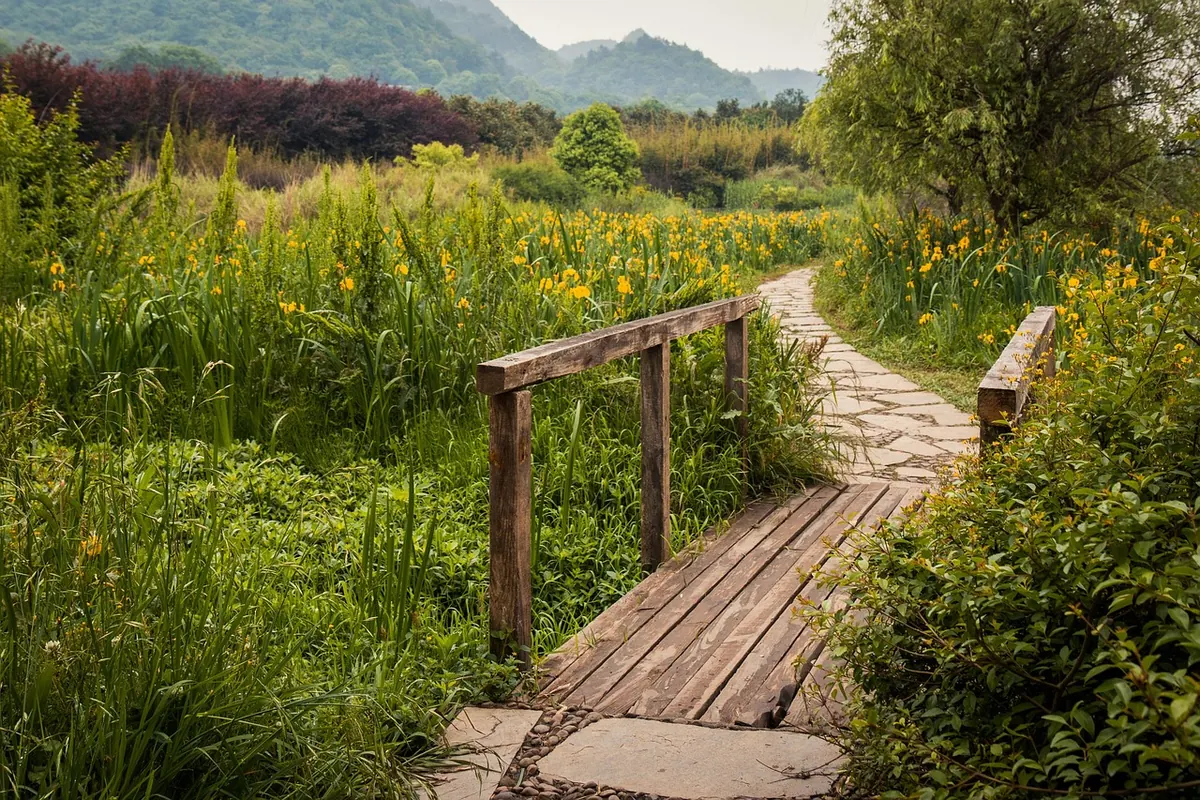
Photo: YangGuangWu / Pixabay